As temperatures climb above 60°F across New York City each spring, stinging insects become an increasingly visible presence — on rooftops, in wall voids, under eaves, and in the parks and gardens that make urban New York livable. For residents who encounter a buzzing cluster near their building or discover an active nest on their property, knowing what they're looking at is the critical first step toward a smart response.
Not all stinging insects are the same, and how you respond to a bee colony should be very different from how you respond to a yellow jacket nest.
Which Stinging Insects Appear in NYC Each Spring?
April through June is the period of most intense activity for stinging insects in New York City. Here's what to expect:
Honey Bees
Honey bee swarms are a common sight in NYC from late April through June. When an established colony becomes too large for its current location, the old queen leaves with roughly half the workers to find a new home. This swarm — a dense, football-shaped cluster of bees, often hanging from a tree branch or ledge — is temporarily exposed while scout bees search for a permanent site. Swarms are generally non-defensive during this phase.
Honey bees that establish a permanent colony inside a wall void, rooftop structure, or chimney require professional attention — not extermination, but relocation. A mature honey bee colony contains tens of thousands of bees and significant quantities of honeycomb; removing the comb is essential to prevent the honey from melting and attracting secondary pests.
Bumble Bees
Bumble bee queens emerge from overwintering in April to establish small ground nests in NYC's parks, gardens, and landscaped areas. Bumble bee colonies are small — rarely more than a few hundred individuals — and bumble bees are among the most docile stinging insects. They do not defend their nests aggressively unless directly disturbed.
Bumble bees are critical native pollinators in the NYC ecosystem. Several bumble bee species are in steep decline due to habitat loss and pesticide exposure. In the vast majority of cases, the correct response to a bumble bee nest in your yard is to mark its location, avoid disturbing the area, and wait — colonies naturally die off by late fall.
Paper Wasps
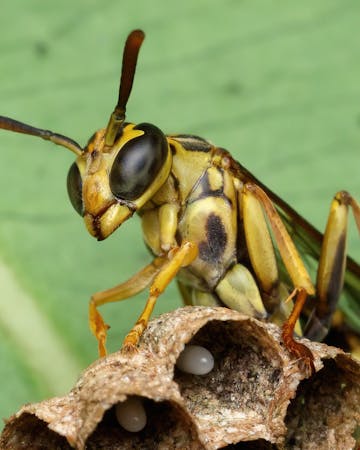
Paper wasps build the open-celled, umbrella-shaped nests found under eaves, on window frames, and beneath railings throughout NYC. They're slender, brownish-yellow insects with long dangling legs in flight. Paper wasp colonies are small — typically 20 to 75 individuals — and they're relatively non-aggressive unless the nest is disturbed directly. They're also beneficial predators of caterpillars and other garden pests.
Yellow Jackets
Yellow jackets are the most aggressive stinging insect commonly encountered in NYC. They build large, papery enclosed nests — often inside wall voids, under stoops, in the ground, or inside abandoned rodent burrows. By mid-summer, a yellow jacket colony can contain several thousand workers and will aggressively defend a zone several feet around the nest entrance. Yellow jackets are the insects responsible for the majority of stinging incidents at outdoor dining areas and rooftop spaces in NYC.
Bald-Faced Hornets
Bald-faced hornets — a large, black-and-white wasp — build the distinctive gray, football-shaped paper nests seen hanging from trees and building structures in NYC. These nests can grow to the size of a basketball by late summer and house several hundred individuals. Bald-faced hornets are highly defensive near the nest and should be treated with care.
How to Tell Bees from Wasps from Yellow Jackets
Identification before calling for help can save you time and money:
Why Bee Colonies Should Be Relocated, Not Killed
Honey bees are essential pollinators responsible for supporting a significant portion of the food supply. New York City's urban beekeeping community — legal in NYC since 2010 — maintains thousands of managed colonies that contribute to pollination in the city's parks and community gardens. Wild honey bee populations in the northeast have been under significant pressure from colony collapse disorder, varroa mites, and pesticide exposure.
Killing a honey bee colony with pesticide is increasingly recognized as an inappropriate response, and in many jurisdictions it's discouraged or restricted. A licensed beekeeper performing a live removal and relocation is the correct response to a honey bee colony that has taken up residence inside a structure.
Our approach at Organic Pest Control NYC includes coordination with licensed local beekeepers for honey bee colony relocation. Live removal preserves the colony, removes all comb to prevent secondary pest issues, and treats any void to deter future colonization.
Wasp Nest Removal: What You Need to Know
For yellow jacket nests, bald-faced hornet nests, and large paper wasp colonies in locations that pose a risk to residents, professional removal is the appropriate response. Here's what responsible removal involves:
For ground nests, treatment timing is similarly critical — disturbing a yellow jacket ground nest during daylight hours when thousands of foragers are present is how most serious stinging incidents occur.
What NOT to Do
Well-intentioned but poorly executed DIY attempts are responsible for a significant percentage of stinging injuries in NYC. Avoid these approaches:
Frequently Asked Questions
How do I know if I have honey bees or yellow jackets in my NYC wall?
The easiest distinction is behavior. Honey bees entering and exiting a wall void will often have visible pollen on their hind legs and move in a steady, purposeful pattern. Yellow jackets move more quickly and erratically, and you're more likely to notice them aggressively investigating food sources nearby. If you can safely observe the insects from a distance, body shape helps: honey bees are fuzzy and rounded, yellow jackets are smooth, compact, and distinctly banded. When in doubt, a brief video or photo shared with a licensed pest professional is the fastest way to confirm.
What time of year do wasp nests in NYC become dangerous?
Wasp colonies are smallest and least defensive in spring when they're just establishing. The risk increases significantly through summer as colonies grow. By August and September, yellow jacket and bald-faced hornet colonies can contain several thousand individuals and will aggressively defend a zone of several feet around the nest. Fall is also a higher-risk period, as colonies begin to die off and remaining workers become more erratic and prone to stinging in search of food.
How long does it take to remove a wasp nest in a NYC apartment building?
A standard exterior wasp or yellow jacket nest treatment typically takes one to two hours, including preparation and treatment time. For nests inside wall voids, the process involves treatment at the entry point followed by a return visit a few days later to verify activity has ceased and to seal the void. Honey bee colony removal from a structural void is more involved and may require coordinating a cut-out with a beekeeper, typically spanning a half-day visit.
Are there native bees in NYC I should know about before calling an exterminator?
Yes — New York City supports over 250 native bee species, including several bumble bee species, mason bees, and leafcutter bees. The vast majority of these are solitary, non-aggressive, and ecologically valuable. Solitary bees do not form colonies and rarely sting. If you see individual bees flying low over a garden bed or entering small holes in the ground or in old wood, these are almost certainly beneficial native bees, not a pest problem. Contacting a licensed pest professional who can identify the species before any action is taken is always the right first step.